Navigate
Preserve alignment marks, coordinates, imaging conditions, and the path to the target structure.

SOLUTION · FAILURE ANALYSIS
Apverion connects microscopy, measurements, process history, observations, and prior outcomes—helping engineers move from an isolated defect to a traceable, reusable body of knowledge.
A single visual signal connected to relevant engineering precedent.
THE FAILURE-ANALYSIS CHALLENGE
The evidence needed to explain a failure rarely lives in one image. It may be distributed across preparation records, process data, elemental analysis, prior investigations, and the experience of the engineers involved.
Apverion is designed to connect those fragments without separating the evidence from its provenance, helping teams investigate faster while preserving the complete learning trail.
VISUAL INTELLIGENCE
Apverion’s vision is to analyze images pixel by pixel and feature by feature, then surface related structures, signatures, mechanisms, and outcomes from a continually expanding engineering knowledge base.
AI surfaces relationships. Engineers determine causality.
FIB CIRCUIT EDIT
Focused ion beam circuit edit turns a physical modification into a controlled engineering experiment. Engineers can expose buried interconnects, sever a conductor, deposit a new connection, and test whether a proposed change alters device behavior before committing to a new mask or design revision.
Its value extends beyond the successful edit. Navigation images, endpoint decisions, milling conditions, deposition geometry, verification images, electrical results, and failed attempts together explain what was changed—and why the result can be trusted.
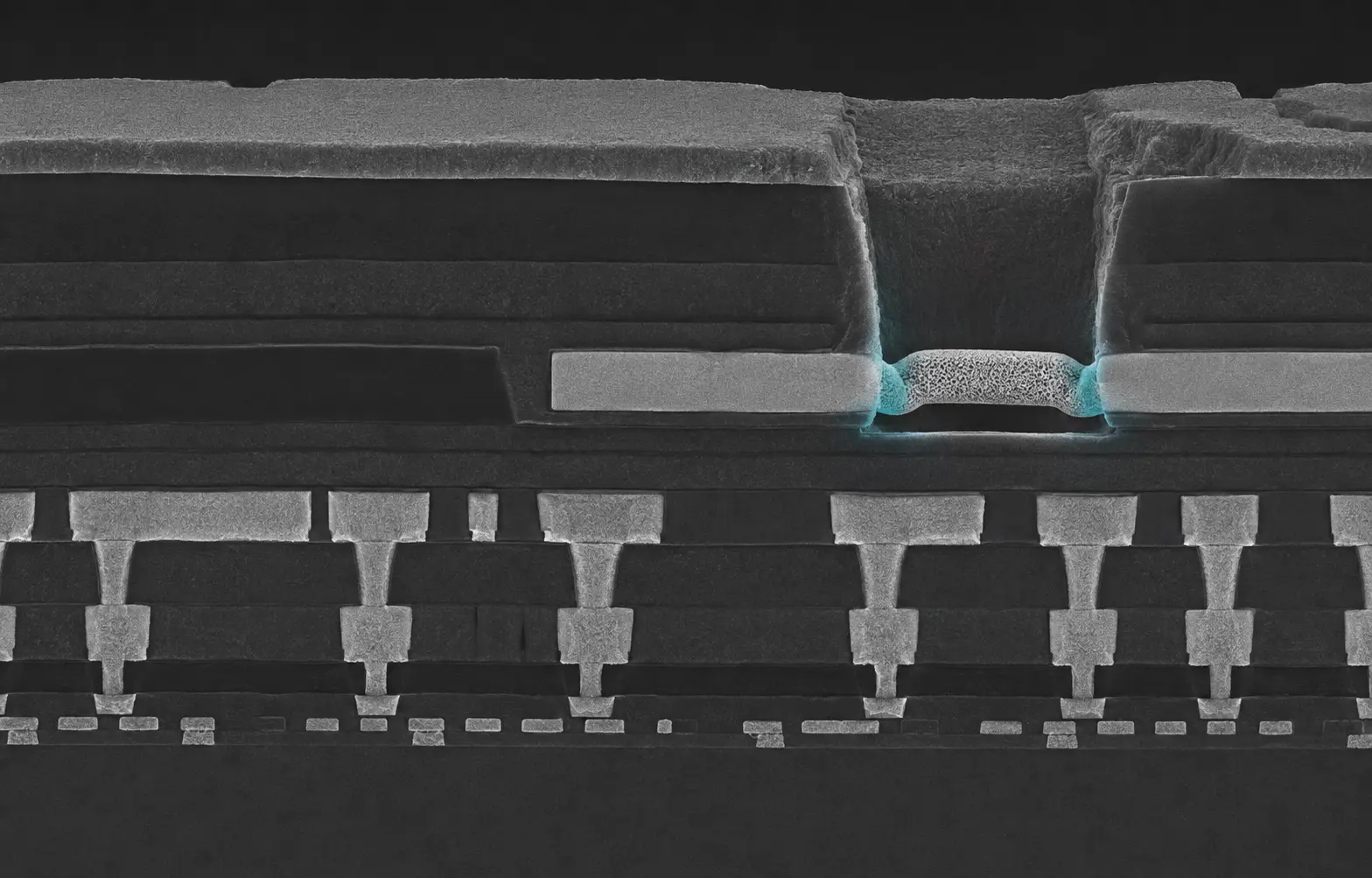
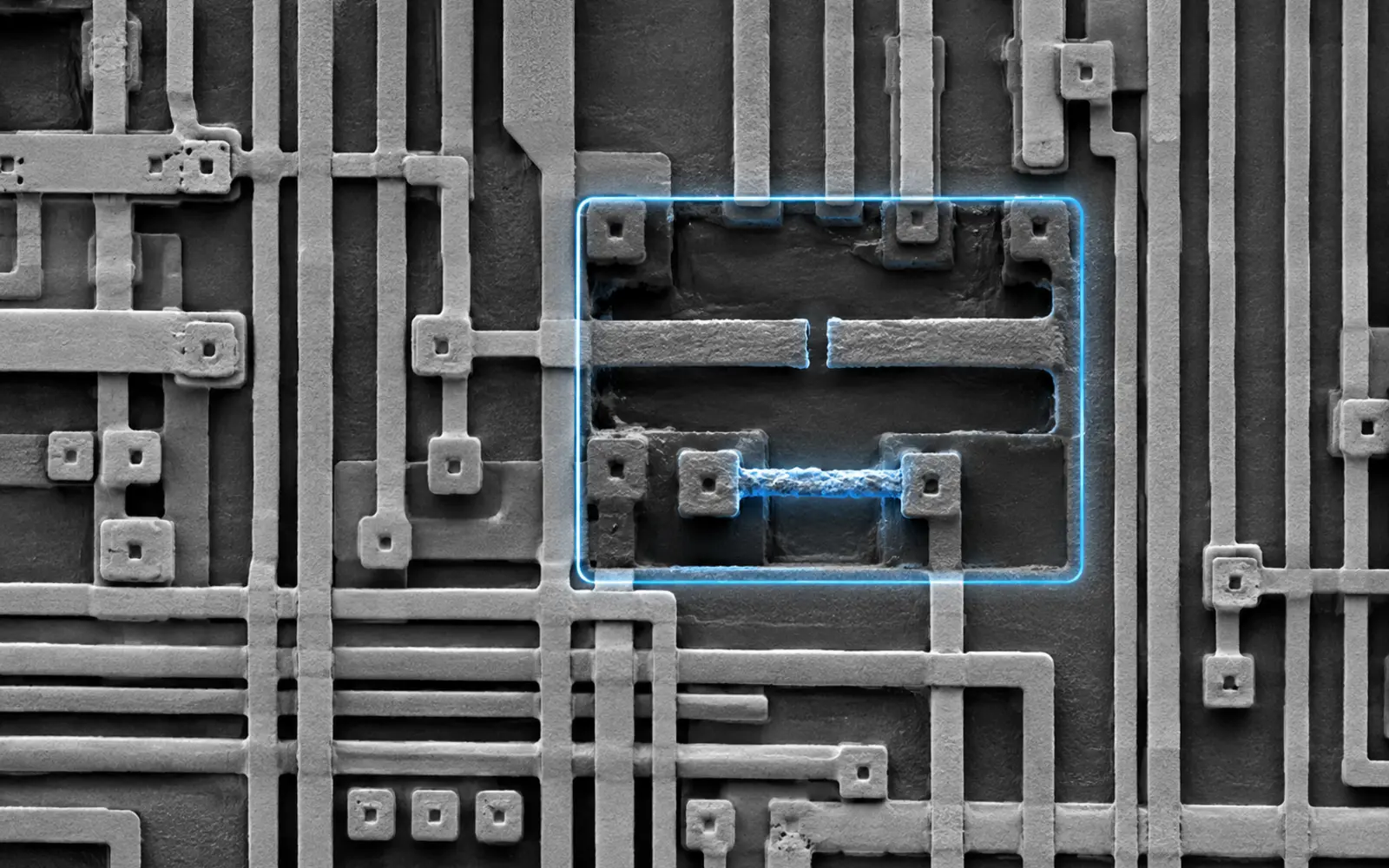
Preserve alignment marks, coordinates, imaging conditions, and the path to the target structure.
Record milling, cut geometry, gas-assisted deposition, dose, endpoint, and operator decisions.
Connect post-edit imaging, electrical measurements, artifact review, and functional response.
Compare edits, failures, structures, and outcomes across authorized historical cases.
THE COMPLETE ENGINEERING RECORD
SEM, FIB, TEM, STEM, optical images, EDS maps, and spectra
Device, material, layer, location, history, and preparation method
Measurements, annotations, technician notes, and engineering review
Tool conditions, process variables, prior changes, and known excursions
Failure mechanism, root-cause evidence, confidence, and corrective action
A KNOWLEDGE-COMPOUNDING WORKFLOW
Establish the failure mode, sample history, business urgency, and evidence required.
Preserve every image, measurement, preparation step, observation, and decision point.
Compare visual features and context with related cases across authorized knowledge.
Connect candidate mechanisms to evidence while preserving competing explanations.
Report a traceable conclusion and return the new knowledge to the governed system.
ENGINEERING IMPACT
Start with relevant precedent instead of beginning every investigation from zero.
Connect conclusions to supporting evidence, context, and prior outcomes.
Make known failure signatures and corrective actions discoverable to future teams.
Retain the reasoning behind the report—not only the final statement.
TRUSTED BY DESIGN
Failure-analysis data can contain highly sensitive product and process information. Apverion’s architecture is designed around authorization, provenance, traceability, client-data separation, and governed reuse.
Explore the platform architectureBRING YOUR NEXT INVESTIGATION INTO FOCUS