Sample provenance
Location, depth, formation, collection method, and chain of custody.

APPLICATION DIRECTION
Connect provenance, mineralogy, morphology, elemental evidence, imagery, preparation, and expert interpretation.
Geological SciencesAPPLICATION DIRECTION
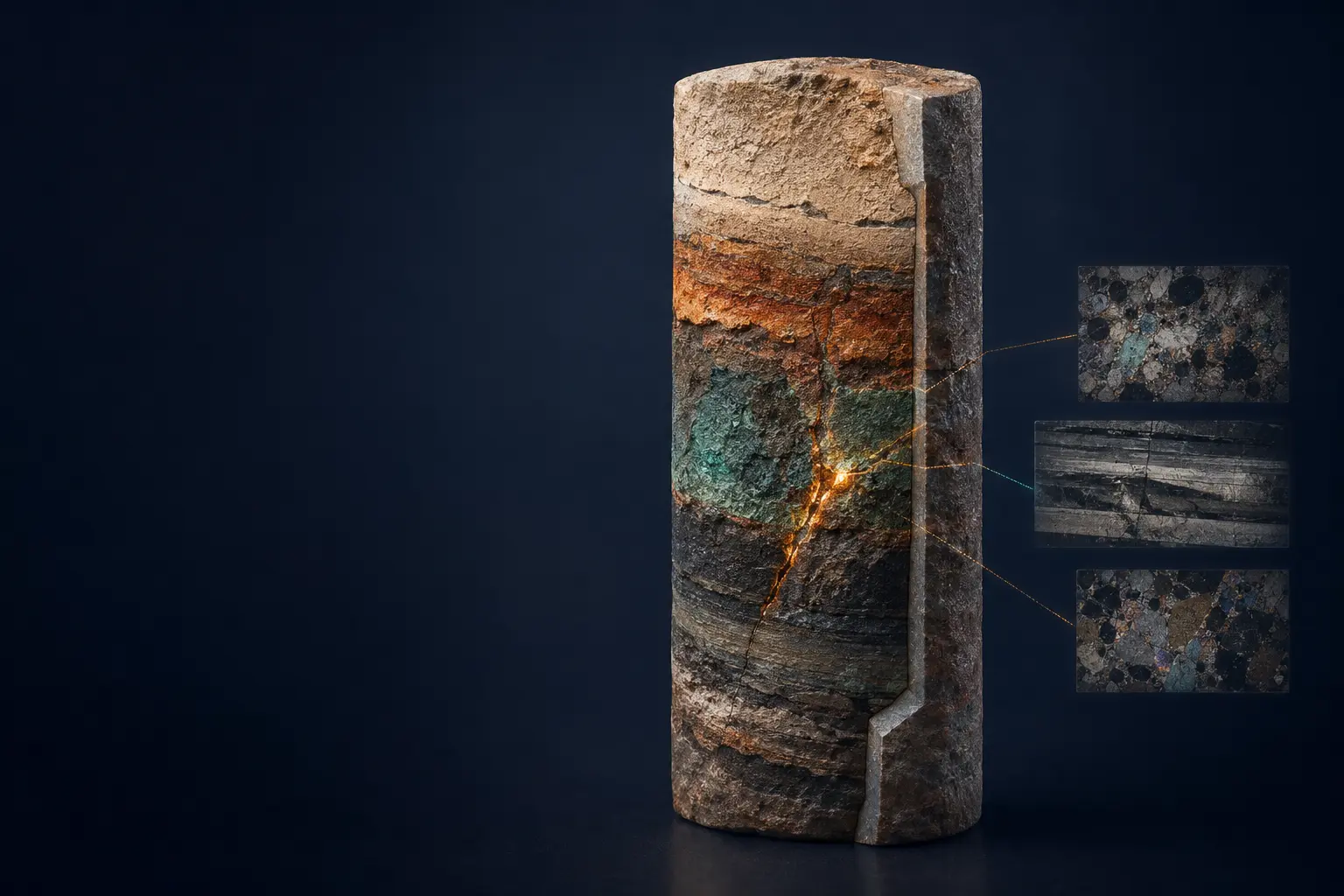
THE KNOWLEDGE CHALLENGE
Geological evidence loses meaning when it is separated from location, formation, sampling context, preparation, scale, and interpretation.Evidence becomes more valuable when its relationships survive.
THE EVIDENCE FIELD
Apverion is designed to preserve not only the artifact, but the conditions, reasoning, and decisions that give it engineering meaning.
Location, depth, formation, collection method, and chain of custody.
Sectioning, polishing, coating, orientation, and alteration risk.
Optical and electron imagery, elemental maps, and scale relationships.
Phase, grain, pore, fracture, inclusion, and depositional relationships.
Expert annotations, competing models, uncertainty, and downstream decisions.
REPRESENTATIVE APPLICATIONS
Connect composition, morphology, texture, and prior confirmed examples.
Carry location and stratigraphic context into laboratory evidence.
Relate microstructure and chemistry to larger-scale models.
Make legacy samples and interpretations discoverable for new questions.
POTENTIAL OUTCOMES
01Preserved sample-to-source traceability
02Faster comparison with prior evidence
03Connected observations across scale
04Greater reuse of legacy collections
This page describes Apverion’s intended application direction for geological sciences. Specific capabilities and integrations will be validated with domain partners and qualified practitioners.